Analysis of B2B MARKETING
INTRODUCTION
It is difficult to master effective marketing. Marketers have a lot to handle when designing their marketing plan, with creative demands, budget constraints, and channel decisions. However, your audience is the most important factor in efficient marketing.
Your promos and adverts are likely to fall on deaf ears if you aren't effectively targeting your buyer's persona. It's almost as if you're not marketing at all. Individual customers and businesses, on the other hand, have very different target audiences. Individual customers are served by certain businesses, while businesses and organizations are served by others.

Source : B2B
Marketing to corporations differs significantly from marketing to individuals. That is why there is a completely separate marketing strategy called B2B marketing, which is the main theme of this article.
What is B2B Market Research and Analysis
B2B (business-to-business) refers to the process of selling products or services to other businesses. Competitive analysis is critical when developing B2B strategies because it highlights your strengths and weaknesses in comparison to your competitors. The goal of B2B marketing is to familiarize other businesses with your brand name and the value of your product or service in order to convert them into customers. Market research can assist you in the following ways:
Recognize market opportunities and threats.
Recognize your differentiators
Learn about your competitors.
Buyers must be understood.
Recognize market size
Recognize trends
NEED OF B2B MARKETING
To gain a better understanding of business interactions, you must first learn about the company with which you are involved. There may also be a large amount of data involved, which can be difficult to manage. We need business-to-business analysis to get our hands on the massive data and improve productivity.
B2B analysis allows for direct contact with buyers and sellers from all over the world, including traders, industrialists, middlemen, drop shippers, and wholesalers. It is an excellent opportunity to expand business networks. One can identify influential companies and contact them directly to form mutually beneficial partnerships. B2B analysis can help small business owners gain market visibility.
Here's a comparison that we have made in order to understand the differences better :
B2B vs B2C MARKETING
B2B Competitor Analysis
In order to create an appealing value proposition, firstly you need to assess the primary players in the industry. Businesses can make strategic decisions about various parameters such as resource allocation, territory planning, pricing, and marketing by identifying rival strengths and weaknesses.
Business information providers play a significant role once again. These tools can help firms identify clients while also revealing information about competitors. When assessing the threat posed by B2B competitors, the following information is useful:
Parent and subsidiary relationships
Sales territory
Earnings
Outstanding loan defaults, late payments, or liens
Legal judgments
Recent news
Understanding the threat posed by other companies is too critical to leave to chance.
B2B MARKETING STRATEGIES
Before you leap right into execution with your B2B marketing strategies, there are a few measures you should do first.

Source : B2B Marketing Stages
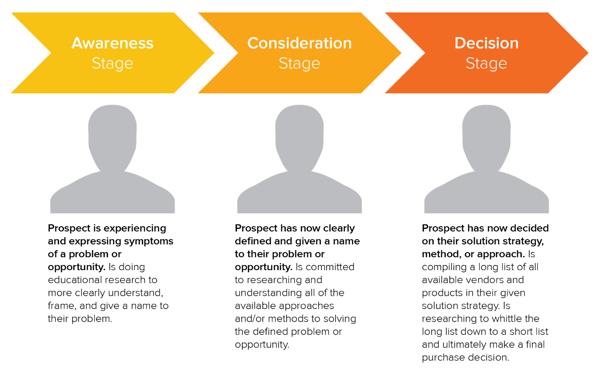
1. Establish your brand's position.
You must completely comprehend your brand positioning in order to develop a successful plan. This statement expresses the who, what, when, why, and how of your brand identity, or how customers view your company.
2. Determine who you want to reach.
Find your target audience, or the people who are truly interested in your brand's products or services. That data may be used to construct buyer personas and learn how people make purchasing decisions, which is a great tool for any type of marketing.
3. Analyze the competition.
A competition study will help you scope out the market and identify what other organisations are marketing to your target demographic. While inspecting competitors, the following aspects should be kept in mind:
Product offerings from competitors
Competitor sales strategies and outcomes
Content marketing and social media presence of competitors
Kind of Information Used to Perform Market Research:
Primary and secondary sources can be used in research. Speaking directly with customers or organisations in your target market through focus groups, interviews, or surveys are examples of primary sources. Secondary sources of information include analyst reports, company websites, and financial reports.
There is a wealth of B2B data available to help you with your market research. Market research tools include the following:
Websites for businesses and trade associations
Websites of competitors
Financial statements
SWOT analysis
Profiles of industries
According to analyst reports
Reports on credit
Company ancestors
News
What Kinds of B2B Marketing Research Exist?
There are numerous approaches to marketing research. Some few approaches are as follows:
Brand investigation
Client research Market research Customer satisfaction survey
Client journey analysis
Customer persona research
B2B DIGITAL MARKETING
Identifying the intended audience.
Developing your website
Improving your online presence.
Running pay-per-click campaigns.
B2B EMAIL MARKETING
Unlike B2C customers, who are most influenced by emotions and entertainment, B2B customers seek logic and positive ROI. Email marketing is also an effective means of disseminating your brand's content. Email newsletters are used by 83 percent of B2B companies as part of their content marketing programme, and 40 percent of B2B marketers believe these newsletters are the most important to their content marketing success.
B2B Social Media Marketing
Social media marketing isn't just for businesses targeting specific consumers. However, many of the B2B companies still struggle with social media marketing. It can be more difficult to use social media to connect with business customers, especially because (as previously stated) there is usually a longer sales cycle and a longer chain of command.
To be more precise, B2B Social Media Marketing may not be where you convert the most leads, and that's absolutely fine. It is most likely to come into play near the start of your customers' buyer journeys.
B2B Market Sizing
Market sizing exercises attempt to estimate the sales potential of a given product or service. Whether a B2B company is launching a new product line or expanding into a new market, it is critical to base expectations on real data.
The size of the market can be expressed in terms of units (how many refrigerated trailers will be purchased?) or dollars (what is the total value of sales?).
Analysis of Business Risks: Every company faces its own set of risks. A thorough B2B market analysis seeks to identify these challenges and propose solutions. The following are major business risks:
Financial risks include concerns about revenue and spending, as well as the ability to access capital, get paid by customers, and manage debt.
Operational risks: Internal challenges, such as supply chain interruptions or labour actions, are examples of operational hazards.
Compliance risks: Penalties for breaking regulations, such as health standards and anti-corruption laws, pose a compliance risk.
Technological risks: threats to data security, including the theft of customer and company information.
Strategic risks: Data security hazards, such as the theft of consumer and company information, are among the technological risks.
Reputational Risks:Events that have the potential to harm a company's reputation. A company's reputation might be harmed by taking a public stance on political matters, being accused of unlawful conduct, or botching a human-resources concern. Each company will be confronted with a unique set of risks. Supply chain concerns, labour strikes, and decreased foot traffic to stores are all threats to retailers. Because the medical equipment sector is so strictly regulated, compliance issues would be of special concern.
B2B MARKETING EXAMPLES
Adobe
Shopify
Mailchimp
Venngage
TravelPerk
B2C is not always B2C
Swiggy as we know is one of the most renowned brands in the food-tech industry. But if you tell anyone that it comes under the B2B segment, one would argue that it is not considering what it takes from the restaurants and sells to the consumers. But what if it is true : Swiggy or Zomato also fall under the category of B2B. How? Swiggy or Zomato for instance have different LOBs which target nothing but different restaurants in order to make them onboard to the app. Now Swiggy, a business is targeting restaurants, again a business, Hence Swiggy or Zomato also fall under the category of B2B. Same is the case with OLA or Uber. What we see is only the frontend part where we see consumers getting served to whatever is being catered. But almost every B2C business which does not produce itself, is 99% a B2B business too.
Conclusion
There won't ever come a scenario where customers are more than businesses. Which lets us come to the point that Businesses have a very small pool among themselves and to target in this pool itself along with the hovering of competitors, is a very heavy task. Hence, Here are some significant factors to bear in mind as a result of our B2B marketing analysis. Even though you're doing business-to-business marketing, you're still dealing with people. The most successful B2B marketers combine logic and passion.Developing your goal, defining your audience, identifying techniques and channels, putting content and campaigns in action, and then continuously monitoring for optimization are said to be the core processes in developing a vast B2B marketing strategy.
Comments
Post a Comment